
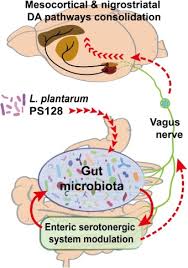

There’s a lot of discussion on the subject of the use of Lactobacillus Planatarum (PS128) as a treatment tool for PD. According to NIH, PS128 is a “psychobiotic” strain shown in preclinical and early human studies potentially to improve motor functions and reduce neuroinflammation in PD by modulating the gut-brain axis. It is suggested that PS 128 acts by increasing dopamine levels, reducing neuron loss, and regulating gut microbiota.
To be candid, I have been taking it for nearly six months, but I’ll wait to share my personal thoughts. Here are some interesting pieces of research I found:
- Lactobacillus plantarum PS128 alleviates neurodegenerative progression in 1-methyl-4-phenyl-1,2,3,6-tetrahydropyridine-induced mouse models of Parkinson’s disease. Read here. This article, published in Brain, Behavior, and Immunity, investigates the neuroprotective effects of the psychobiotic strain Lactobacillus plantarum PS128 (PS128) in a mouse model of Parkinson’s disease induced by the neurotoxin MPTP. The study found that four weeks of oral PS128 administration significantly alleviated motor deficits, reduced dopaminergic neuronal death in the nigrostriatal pathway, and mitigated the reduction of striatal dopamine. Furthermore, PS128 was shown to suppress neuroinflammation and oxidative stress while increasing neurotrophic factors like BDNF and NGF. Fecal analysis also indicated that PS128 modulated the gut microbiota by reducing Enterobacteriaceae and enhancing methionine biosynthesis pathways, suggesting that PS128 acts through the microbiota-gut-brain axis to potentially prevent or treat neurodegenerative progression.
- The Benefits and Applications of Lactobacillus plantarum in Food and Health: A Narrative Review. Read here. This narrative review explores the versatile benefits of Lactobacillus plantarum, a gram-positive probiotic bacterium widely recognized for its safety and efficacy in both the food industry and medical sectors. The article highlights its industrial applications, such as extending food shelf-life, enhancing flavor, and producing essential enzymes and antimicrobial bacteriocins like plantaricin. Beyond food preservation, the review details significant therapeutic properties, including antioxidant, anti-inflammatory, and anti-cancer activities, as well as its potential in managing metabolic disorders like obesity and diabetes. Notably, it discusses the emerging role of specific strains as psychobiotics that may alleviate depression through the gut-brain axis, while concluding that while L. plantarum is generally regarded as safe, its application should be tailored to individual health profiles to avoid rare risks like antibiotic resistance or opportunistic infections.
- The Add-On Effect of Lactobacillus plantarum PS128 in Patients With Parkinson’s Disease: A Pilot Study. Read here. This pilot study investigates the add-on effects of the psychobiotic Lactobacillus plantarum PS128 (PS128) in patients with Parkinson’s disease (PD) who experience significant “OFF” periods. Over a 12-week open-label trial, 25 participants took 60 billion CFU of PS128 daily alongside their stable anti-parkinsonian medication. The results showed significant improvements in UPDRS motor scores during both the ON and OFF states, particularly in alleviating akinesia and increasing the overall duration of the ON period. Additionally, participants reported an enhanced quality of life as measured by the PDQ-39, while biochemical analysis revealed a reduction in the inflammatory marker myeloperoxidase (MPO). Although the study did not find significant changes in non-motor symptoms like constipation, the authors conclude that PS128 holds promise as a therapeutic adjuvant for managing PD through the microbiome-gut-brain axis.
- Probiotics and PD. Read here. This article from the American Parkinson Disease Association (APDA) examines the potential for probiotics and prebiotics to manage Parkinson’s disease (PD) symptoms through the manipulation of the gut microbiome. While research suggests that certain probiotic strains can effectively reduce gastrointestinal issues like constipation and bloating, evidence regarding their impact on motor symptoms remains limited but is being actively explored in clinical trials involving strains like Lactobacillus plantarum PS128. The author notes that prebiotics—fiber-rich foods like leafy greens and whole grains—may actually be a more effective long-term strategy for fostering a healthy internal environment than supplements alone. Ultimately, because the microbiome is a complex system and commercial products vary widely, the article emphasizes that patients should consult their physicians before starting any probiotic regimen.